Kalamay Hati

Resulta ng larawan para sa kalamay

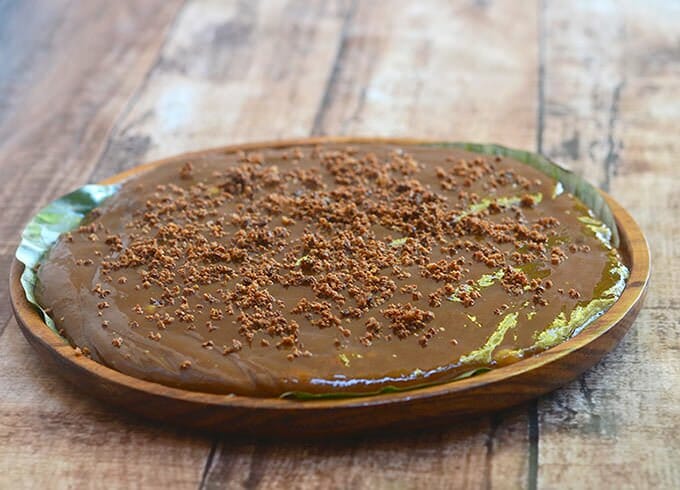
Sticky rice cakes such as kalamay is a special treat in the Philippines. This is often served on special occasions such as  holidays and town fiestas. Kalamay hati is usually eaten for breakfast with a cup of coffee on the side, while there are other people who enjoy kalamay as a snack.

Latik, which is a residue of coconut milk is sprinkled on top of the kalamay to make it taste better. It is simply made by boiling coconut milk or cream while continuously stirring until a solid residue forms. I love to have kalamay for breakfast because it keeps me full for a long time. A small slice of this wonderful rice cake is all I need to get me going and start my day.

Ingredients

  • 2 1/4 cups glutinous rice flour
  • 2 1/4 cups muscovado or brown sugar
  • 2 cups coconut milk
  • 2 cups coconut cream
  • 1/2 cup water
  • 1/2 cup latik

Instructions

  1. Prepare a plate or round pan that you will use for the kalamay. Start by placing a clean banana leaf over a round pan. Brush some cooking oil or coconut oil on the banana leaf. Set aside.
  2. Combine coconut milk, coconut cream, water, and glutinous rice flour in a deep cooking pot. Mix well until then texture of the mixture becomes soft. Use wire whisk if necessary.
  3. Turn the heat on to medium. Gradually stir until the mixture starts to get hot. You will notice that lumps will form, continue to stir until bubbles appear.
  4. Set the heat to low-medium. Continue to stir for 15 minutes.
  5. Add the sugar. Mix well to incorporate. Continue to mix for the next 30 to 40 minutes or until the mixture becomes really thick and the color turns dark brown.
  6. Transfer the thick mixture on the prepared plate or pan. Spread and top with latik.
  7. Let it cool for a few minutes. Serve.
  8. Share and enjoy!

Balamban Liempo, Philippines

History

“Tastier than Lechon”, as they claim it, Balamban Liempo is a chunk of pork stuffed with some secret ingredients (like green grass of some sort), making it so flavourful. It has a crispy outer layer which makes it even tastier. Their tag line must have been true after all.

There are 2 accessible locations where you can find Balamaban Liempo in Cebu. One is at Gorordo Avenue right across the Mormon Temple before JY Square. The other one is at F. Cabahug Street Mabolo, just in front of Rainforest Park Cebu and Center for International Education (CIE).

2. Balamban Liempo

Ingredients

3 stalks lemongrass (tanglad), trimmed, pounded, and chopped roughly

4 cloves garlic, minced

4 fresh basil leaves

2 tablespoons salt

1 teaspoon pepper

1.2 kilos pork, divided into 5 slabs

oil, for deep-frying

How to Cook Liempo de Balamban (Herb-stuffed Pork Belly)

Combine lemongrass, garlic, basil, salt, and pepper in a large mortar and pestle; grind to a paste.

With a small knife, cut small pockets in pork, between the layers of fat and meat.

Stuff the herb mixture into the holes. Tie with kitchen twine.

Arrange pork pieces in a pot, skin side up, and cover with enough water. Bring to a simmer and cook for 1 1/2 hours or until tender.

Remove pork pieces from pot. Transfer to a rack and let meat dry.

Deep-fry pork in preheated oil until golden and crisp. Alternatively, you can roast the pork in a preheated 350°F oven or grill over medium hot coals until golden brown. Serve with seasoned vinegar and stir-fried kangkong, if desired.

KNICKER BOCKER, ZAMBOANGA CITY, PHILIPPINES

The knickerbocker is made of a mix of fruits (slices of mango, banana, apple, and watermelon), gelatin, shaved ice, and sweet milk, with a scoop of ice cream on top. It doesn’t look much, but it’s actually very sweet.

Image result for knickerbocker zamboanga

INGREDIENTS:

  • A variety of chopped fruit, such as strawberries, bananas, melon, grapes, and peaches
  • Vanilla ice cream
  • Fruit syrup, traditionally peach or raspberry sauce
  • Clotted cream
  • Whipped cream (only if clotted cream is not available)
  • Cherry
  • Ice cream wafer
  • Chopped hazlenuts (optional)

PROCEDURES:

  1. Get a tall glass (like the type traditionally used to serve milk shakes).
  2. Chop fruit into small slices or pieces. Ideally use colorful fruits like peaches, grapes, strawberries, melon or banana. Place these in the base of the glass.
  3. Add three scoops of ice cream on top of the fruit. A minimum 2 scoops of vanilla ice cream is the usual amount.
  4. Pour a fruit sauce over the ice cream – Melba (peach) or raspberry sauce is traditional.
  5. Top this with Clotted cream (or thick whipped cream).
    • Put a cherry on top and add an ice cream wafer. Other toppings include nuts, jelly, fresh fruit
  6. Serve chilled along with a long ice cream spoon and a large napkin.

Sinapot: Bicol’s Favorite Snack

Who doesn’t love this favorite snack that every Bicolano loves to eat during merienda time? Bicolanos love to eat sinapot or sometimes called maruya because of its crispy texture. Sinapot literally translates to dinikit-dikit in Filipino, because the sliced up bananas are skewered side by side with a cleaned out coconut leaves spine before cooking.

The sinapot are usually made from saba bananas. In the Bicol version, it does not “fan” the bananas. Instead they are simply sliced lengthwise before frying in batter. If you want to know how to make the sinapot, this is the recipe:


Ingredients
8 pieces ripe banana, saba
1 1/4 cup flour
1/2 cup milk
1/2 cup water
1 tsp baking powder
1 tsp salt
2 tsp sugar
1 egg, beaten
oil for frying
Procedure:
In a mixing bowl, combine the flour, baking powder, milk, beaten egg and water. Slightly beat all the ingredients to mix.
Add the salt and sugar and beat until it form a batter. Set aside.
Prepare the ripe saba by peeling it and sliced each piece in 2 length wise cut.
Put the sliced bananas in the batter mixture and make sure all sides are coated with the batter.
Heat oil in pan over medium heat and fry the banana for about 10 – 15 minutes or until golden brown.
Drain excess oil using paper towel.

Dinuguan – Sampayna in Cagayan de Oro PHILIPPINES

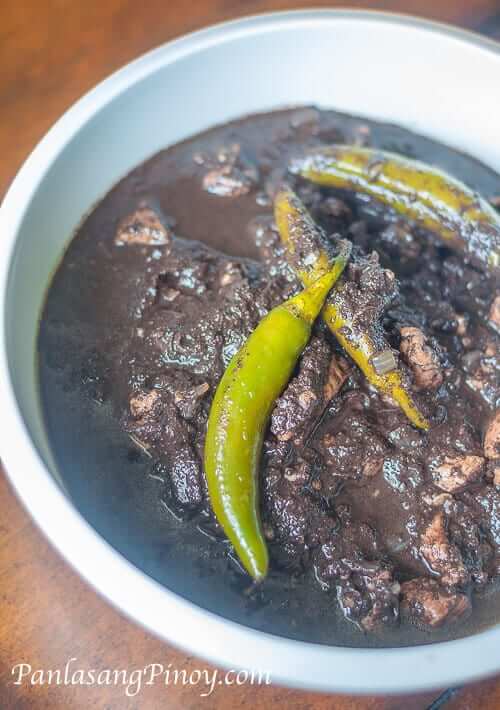
JunMags has been cooking for more than 50 years. As a child and later on as a teen, this was how he prepared Cagayan de Oro’s version of Sampayna or Dinuguan. This, he says, is an old recipe. Instead of prime cut meat, the main ingredient is pig’s small intestine, cut into small pieces.                                                                                                                                                      filipino dinuguan recipe

Ingredients

  • 1 lb pork loin cut into cubes
  • 1 cup vinegar
  • 2 pcs long green pepper
  • 1 1/2 tbsp brown sugar
  • 1 medium sized onion chopped finely
  • 1 tbsp garlic minced
  • 1 tbsp cooking oil
  • 1 cup water
  • 10 oz pork blood

Instructions

  1. Sauté the garlic and onion in a pan
  2. Add the pork and sauté for about 5 mins
  3. If you like it to be more tasty, you may add 1 pork or beef cube followed by a cup or two of water.
  4. Simmer until the water is almost gone to tenderize the meat
  5. Add the pork blood and mix well. Let this simmer for 10 minutes
  6. Add the vinegar. Simmer for 15 minutes.
  7. Put the brown sugar in followed by the long green pepper and simmer for 2 minutes
  8. Serve hot
  9. Enjoy your meal!

La Paz Batchoy in visayas

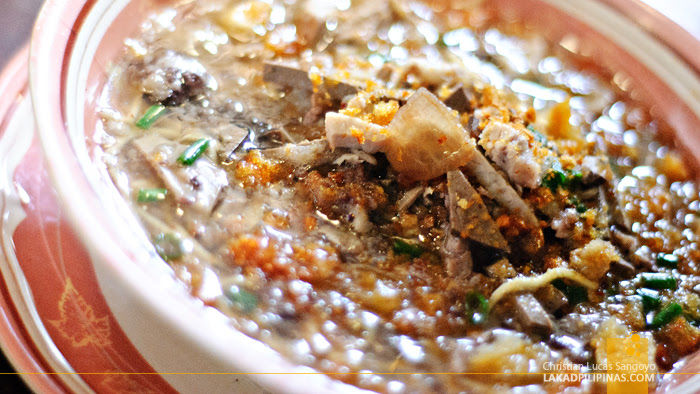
The ultimate Filipino noodle soup is a favorite for a reason. Dig into firm egg noodles that swim in a slow-cooked broth with lots of flavorful toppings: crunchy garlic, chicharon bits, green onions, and lots of pork!


Resulta ng larawan para sa la paz batchoy

La Paz-style Batchoy Ingredients

10 cups chicken stock, divided

1 medium white onion, chopped

4 cloves garlic

4 tablespoons dried shrimp

1 tablespoon brown sugar

1 tablespoon soy sauce

1/4 teaspoon pepper, crushed

salt

250 grams pork, (use kasim), cut into 1-inch pieces

150 grams pork liver

1 piece chicken, use breast part

1/2 kilo fresh mike noodles

chicharon

garlic, fried and chopped

shallots (sibuyas tagalog), fried

spring onions

1 whole egg, Optional

How to Make La Paz-style Batchoy

Make the broth: Put 8 cups of stock and other broth ingredients in a large pot. Bring to a boil.

Add pork kasim, liver, and chicken in the pot. Let simmer for 20 to 25 minutes or until pork, chicken, and liver are tender. And remaining stock, if necessary.

Remove pork, liver, and chicken from pot and let cool. Slice the pork, liver, and chicken into thin strips and set aside.

Strain the stock. To assemble, place noodles and pour the hot stock over the noodles. Top with the slicked pork, liver, and chicken. Garnish with chicharon, fried garlic, fried shallots, and spring onions. If desired, crack an egg and serve immediately.

HUMBA in CEBU, PHILIPPINES

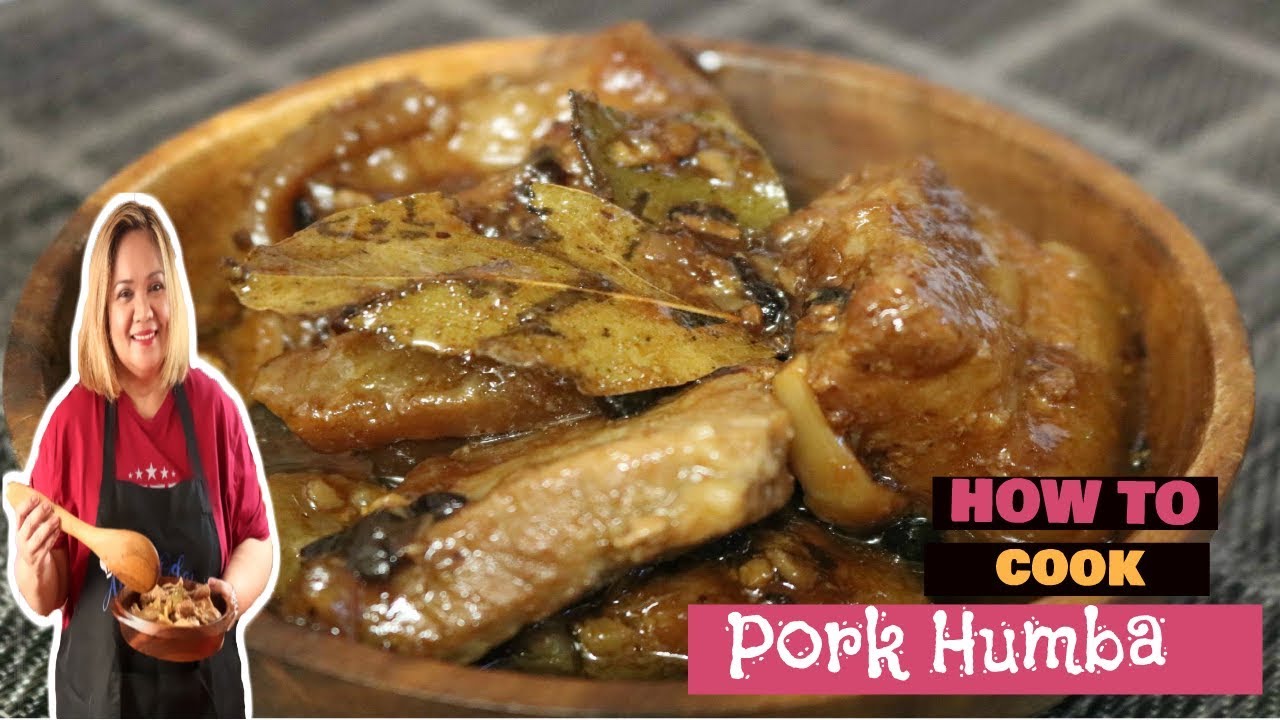
Humba is a stewed pork dish with similarities to Filipino Adobo. Although the two dishes resembles in terms of appearance, Humba is “sweet, sour, and salty” all at once in taste while Adobo is “sour and salty”. Humba uses all the basic ingredients of Adobo with the addition of brown sugar, salted black beans (tausi), and banana blossoms. Three parts of the pig such as pork belly, pork ham and pork hocks are the most common meat used in preparing this scrumptious Filipino dish.

Although Pork Humba is popular in the regions of Visayas and Mindanao, there were different claims as to the origins of this delicious dish. One claims that it is Chinese in origin based on the assumption that the ingredients of soy sauce, brown sugar, and tausi were all Chinese by influence. Furthermore, Pork Humba is also very similar to Chinese Hong-ba recipe in terms of flavor and cooking preparation. Another claims that it is indigenous because Humba sounds like Umba (visayan term) but it contradicts the fact that Humba is using some of the ingredients brought to the Philippines by the Chinese. Or maybe, just maybe that this recipe was created indigenously by the Cebuanos using the modern day indigenous ingredients in Cebu. Some believe that Humba evolved from the Philippine famous Adobo dish because it uses its base ingredients. Whichever claim is true, I believe that this delicious Humba recipe was created because of the ingenuity and innovative culinary skills of the Filipinos.

Just like the Filipino Adobo, variation of this Humba recipe develops when you add other ingredients such as pineapple juice, herbs, mushrooms, chili peppers, potatoes, hard boiled eggs, dried shrimps, star anise, and oyster sauce.


Image result for humba


 Ingredients

  • 1 lb pork belly, cut in serving pieces
  • 1 tablespoon garlic, crushed
  • 1 small onion; chopped
  • 1/3 cup vinegar
  • 1/4 cup soy sauce
  • 1/4 cup brown sugar
  • 3 bay leaves
  • 1 cup rice water
  • 1/4 tablespoon ground black pepper (or whole peppercorn)
  • 2 tablespoons salted black beans (tausi)
  • 1/2 cup dried banana blossoms
  • Cooking oil

Cooking Instructions

  1. Marinate pork in soy sauce, vinegar, bay leaves, and pepper for 1 hour.
  2. Sauté garlic and onion.
  3. Add pork from the marinade.
  4. Stir fry for few minutes until pork starts to render its oily fat.
  5. Add rice water and the marinade. Bring to a boil and then lower heat to medium fire.
  6. Stew until most of the liquid has evaporated.
  7. Add brown sugar stirring once in a while. Simmer until an oily sauce consistency is achieved.
  8. You can balance seasoning with soy sauce, vinegar, or sugar according to your taste. Serve hot!


Cooking Tips

  • Adding 1 cup of pineapple juice along with the rice water and marinade will give you a better taste of Humba.
  • Instead of using belly as your choice of pork, you can also use ham or hocks as substitute.


Laing or Pinangat,Southern Luzon Cuisine

The Bicol region is consist of six provinces namely Albay, Camarines Norte, Camarines Sur, Catanduanes, Masbate, and Sorsogon. Not only will you find here one of the world’s most photogenic volcanoes, the Mayon Volcano, but also some of the most popular dishes in the country.

Bicolanos are known for using coconut milk and siling labuyo (hot chilies) in their cuisines. So here are a few of their dishes that are known throughout the country.

Laing

Ingredients

100 grams taro leaves (dahon ng gabi), (use dried leaves), (dried gabi leaves)
2 slices pork, cut into 1/4 inch-thick strips
1 to 2 tablespoons shrimp paste (bagoong alamang), to taste2 cloves garlic, chopped
3 cups coconut milk (gata)
2 cups coconut cream (kakang gata), or coconut cream
1 thumb-sized piece ginger, cut into large strips
4 pieces green finger chili (siling pangsigang), cut into 1-inch pieces
2 pieces red chili pepper (siling labuyo), sliced thinly             

Cooking Procedure

In a large pan over medium heat, spread out your pork belly strips and pour water over until meat is covered. Place the lid on and and cook until all liquid has evaporated and the pork fat has started to render.Combine the shrimp paste, garlic, coconut milk and ginger in the pan and stir for about 2 minutes.Add the taro (gabi) leaves and let it absorb the coconut milk. Avoid stirring the leaves. Let this boil and dry up for about 10 minutes.Add in the kakang gata or coconut cream, green chilies and bird’s eye chilies. Again, leave to boil or dry up for another 10 minutes. Add more chillies, if preferred. Serve warm with rice and other viands.


BUKAYO IN LINGAYEN, PANGASINAN, PHILIPPINES

Bukayo  is a Filipino version of coconut candy, it is made with strips of mature Buko meat (coconut meat) and dark brown sugar.  In this version we added Muscovado sugar to make the taste less sweet compared to the traditional Bukayo you can buy in the market and this one is soft and chewy.   If you have diabetes, this Filipino dessert is not good for you because of high sugar content and consume it in moderation.

Bukayo candies come in different shapes, some are round in ball form, another in a flat circle shape and some are cut into square shape. Bukayo is believed to have been originated from Lingayen, Pangasinan.

Image result for BUKAYO

Bukayo Ingredients:

  • 3 cups Buko meat (coconut)
  • 1 ½ cups Brown sugar
  • ½ cup Muscovado sugar
  • 2 1/2 tablespoon Buko juice or Water
  • 3 pcs calamansi (optional)
  • Sesame seeds (optional)
  • Banana leaves


Bukayo Cooking Instructions:

  • In a large saucepan, combine Muscovado sugar, dark brown sugar, and the Coconut juice then apply heat and bring to a simmer.
  • The fire must be the lowest heat possible and cook for about 1 minute until the all the sugar dissolves.
  • Add-in the Buko (coconut) strings and calamansi juice.
  • Mix well, make sure to evenly coat the buko strings with sugar , then cook until the sugar syrup thickens and becomes caramelized, it will take about 15 minutes of cooking.
  • When the Bukayo mixture becomes very sticky enough to hold its shape, then you are done.
  • Turn off the heat, let it cool for a minute or two, then form the mixture into a flat circle on top of a greased banana leaf, repeat the process until you’re done with the rest of the Bukayo mixture then set aside to completely dry.
  • When the Bukayo is completely dry, you can now serve it or store in a jar.

BISAYAN KINILAW, PHILIPPINES


This is one of my dad’s favorite dish. Some people call it “the Philippines answer to Japan’s Sushi” since it is, basically, a dish of uncooked fish. Though, technically, it has more in common to Latin America’s ceviche since the dish is cooked by the vinegar marinade.

j

Ingredients

1/2 kilo of tuna fillets (or any fish that you may have on the refrigerator)

1 good-sized hand of ginger, peeled and sliced (this is to get rid of the unwanted smell)

1  head of garlic, peeled and crushed

2 white onion, thinly sliced (or you could use red onion if you want it traditional)

5 green chili peppers, cut diagonally into 1/4-inch thick slices

(you may not use this if you don’t want it to be spicy hot)

1 red or green bell pepper, diced

2 cups of vinegar (if you have suka’ng tuba, or coconut vinegar, then it is preferable)

salt and pepper (to taste)

1/2 cup of kalamansi juice (lemon)

1 1/2 cup of kakang gata

(coconut cream, you could discard with this if you don’t have any)


Cooking procedure

Make sure that you fillet the fish moderately thin and without bones and skin. Then cut the fillet into cubes. Put it into a bowl and sprinkle with some salt and pepper, make sure to mix it well.

Pour in the vinegar, mix well, and put it in the refrigerator for about an hour or so.

Drain a little of the excess marinade. Put in the rest of the ingredients, mix well.

Put it back in the refrigerator and let it chill for about 30 minutes.

Serve it cold.