Pork Sisig

Resulta ng larawan para sa food dice visayas

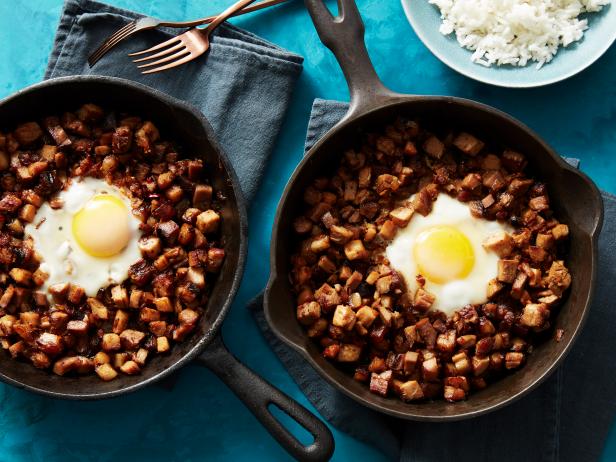
Sisig is a popular Filipino dish. It is composed of minced pork, chopped onion, and chicken liver. It is a favorite dish for pulutan. Sisig can also be enjoyed as a main dish with a cup of warm white rice on the side. I like to pair it with beer and spirits.

The originally sisig is composed of chopped pigs face with snout and ears. Chicken liver, pig brain, and onion along with calamansi are also part of the mix.
There are several sisig versions available today. There is a variety of main ingredients. It ranges from the original pig’s face to a more healthy seafood concoction. Squid Sisig, Tuna Sisig, Bangus sisig, and Tahong Sisig are some examples.

Pork Sisig has its variations too. Pork belly is a widely used ingredient in conventional sisig versions. There are also versions that use pork shoulder. Some will mix and match different pig parts.

Chicken sisig is a version that is starting to gain popularity nowadays. It is a good option for people who don’t eat pork.

Ingredients

Braised Pork:
  • 1 cup Filipino soy sauce
  • 1/2 cup coconut vinegar
  • 3 tablespoons salt
  • 1 1/2 tablespoons sugar
  • 1 teaspoon whole peppercorns
  • 10 cloves garlic
  • 1 pig ear
  • 1 pork jowl
  • 1/2 pork snout
  • 1/2 pork tongue
Pork Sisig:
  • 1 tablespoon ginger, chopped
  • 5 cloves garlic, chopped
  • 4 bird’s eye chile peppers, chopped
  • 1 onion, diced
  • 1/4 cup Filipino soy sauce
  • 2 tablespoons calamansi juice
  • 2 tablespoons coconut vinegar
  • 4 eggs
  • 4 servings rice, cooked

Directions

For the braised pork: Combine the soy sauce, vinegar, salt, sugar, peppercorns, garlic, pig ear, jowl, snout and tongue in a large stockpot and add enough water to completely cover the pork. Simmer on low heat until the pork is soft but not completely tender, 1 hour 30 minutes. Remove the pork and chill.

For the pork sisig: Preheat a charcoal grill to high heat, preferably using lump charcoal. Grill the pork parts until the skin is crispy and slightly charred, and then refrigerate.

Dice the pork parts into small pieces. Saute the ginger, garlic, chiles and onions in a large saute pan for 1 minute. Add the pork and saute for 4 minutes. Add the Filipino soy sauce, calamansi juice and coconut vinegar.

Divide the pork among 4 pre-heated fajita platters. Crack 1 egg onto each platter and mix the egg and pork together. Serve atop the rice.
DINAKDAKAN in PAMPANGA, PHILIPPINES

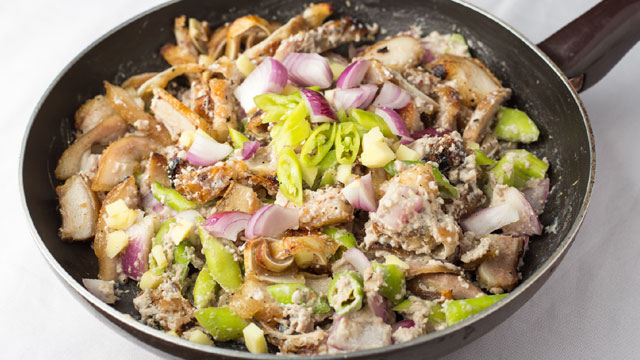
Dinakdakan is an Ilocano dish that is made of grilled and boiled pig parts—it works as a delicious and tasty appetizer, too! The pig’s head, ears, and brains are some of the ingredients incorporated so as not to waste any part of the animal. Cooking methods such as grilling and boiling are used in making this dish because it makes the preparation of the dish much simpler. Adding chili also gives it a bit of a bite, making it the perfect pork dish to eat with loads of rice.

Dinakdakan Ingredients

1 kilo pig ears

1 kilo pig face (maskara)

1/4 kilo pig’s brain

1 medium red onion, sliced

6 green chili pepper , sliced

4 tablespoons vinegar, use Sukang Iloko

salt, to taste

pepper, to taste

How to Make Dinakdakan

Pour 6 to 8 cups water in a cooking pot. Let boil. Add salt and pepper. Add-in the pig ears and face. Set the heat to low and continue to boil for 50 to 60 minutes or until meat is fork tender. Strain and set aside.

Boil the pig’s brains using a strainer (or a plastic container to avoid brain from disintegrating) and cook for 10 minutes or until they turn white. Remove cooked brains from heat and set aside.

Heat the grill. Grill the ears and face for 4 to 6 minutes per side or until it turns a bit crisp, but not burnt.

Remove the grilled pig parts from the grill. Let it cool down and start chopping into bite-size pieces.

Combine pig’s brain and vinegar in a mixing bowl. Season with salt and pepper. Add the ginger, chili, onion, and salt, if needed. Add the chopped pig’s face and ears. Tansfer to a serving plate.


Guso

Resulta ng larawan para sa food recipe for mindanao

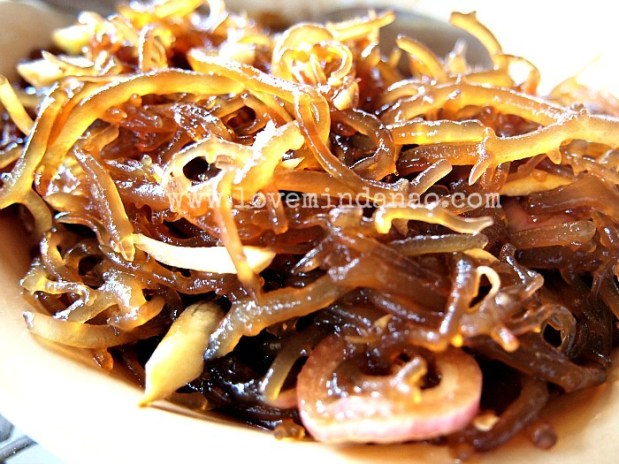
This particular seaweed or agar agar as others call  it, is very much common in the coastal waters of Visayas and Mindanao. The only difference is that, instead of serving it fresh garnished with onion, tomatoes and vinegar, the Tawi Tawinians blanch the seaweeds then added with little soy sauce and some spices like ginger, onions , giving it a yellowish color.

Ingredients

  • 1 large red onion, chopped
  • 1 cup chopped pajo green mango
  • 1 cup lato seaweed
  • 1 cup halved cherry tomatoes
  • 2 cups guso seaweed

For the dressing

  • pinch of salt
  • pinch of sugar
  • 2 tablespoons calamansi juice or 1/4 cup vinegar

Cooking Procedures

  1. In a strainer, put the lato seaweeds and wash them under running water and drain.
  2. In the strainer, pour hot water over guso seaweeds to soften.
  3. In a bowl, put the seaweeds tomatoes, onion, and chopped mango then toss.
  4. For the dressing – In a separated bowl, mix vinegar or calamansi, salt and sugar. Then pour onto the seaweed salad.

Serve!

Rendang

Rendang

A dish acquired by Maranaos in Southern Philippines from their neighboring country Indonesia. The Filipino version of the dish is a bit different in terms of preparation methods to suit their tastes and some ingredients are substituted with local components. Maranao’s rendang is prepared by crushing the spices before frying and cooking it with the beef and coconut milk. The dish can also be described as a caramelized curry.Beef rendang is an Indonesian spicy dish and no wonder the cooking is similar to our local dishes because Filipinos also have Indonesian ancestors. But this beef rendang dish has a more tedious way of preparing. You have to make a spice paste first by grinding it on the mortar and pestle and frying it before cooking the beef. Unlike most Filipino cuisines that we throw everything in the pot when cooking. There are also some ingredients that are only indigenous to Indonesia and some parts of Southeast Asia like the galangal, very similar to ginger root in texture and shape but has a more exotic taste. But is can be substituted with ginger. Now you don’t have to go to Indonesia to taste this dish, you can cook it right in your own kitchen.

Ingredients
For the spice paste:
  • 8 dried chilies, softened in boiling water and drained
  • 10 small shallots, finely chopped
  • 7 cloves garlic, minced
  • 3 Tbsp. ginger, minced
  • 2 Tbsp. cooking oil
  • 5 tsp. galangal, peeled, cut into thin slices (can be substituted with ginger)
  • 2 stalks lemongrass, pounded
  • 1 pc tumeric leaf
  • 5 kaffir lime leaves, torn
For the beef rendang:
  • 1 kilo beef briskets cut into cubes
  • 1½ cups coconut milk
  • brown sugar or muscovado sugar to taste
  • salt to taste
Instructions
How to make the spice paste:
  1. With mortar and pestle, grind the softened dried chilies, shallots, garlic and ginger into a fine paste.
  2. Heat the oil in a stew pot over moderate heat and fry the paste for 10 minutes and until fragrant.
  3. Be careful not to burn the paste. Keep adding some oil a little at a time if the paste becomes too dry.
  4. Add the galangal (or ginger), lemongrass, turmeric leaf, and kaffir lime leaves.
How to cook beef rendang:
  1. Add beef cubes to the fried spice paste. Stir in coconut milk and add salt to taste.
  2. Bring to a simmer (don’t boil), cover and stir from time to time until beef is tender for about 3 to 4 hours.
  3. Add the sugar, increase the heat and cook a few more minutes, until the sauce has thickened.
  4. Serve hot with plain steamed rice, turmeric or java rice.

Panutsa

Panutsa

Panutsa, or also called as “Peanut Brittle” in English Dialect, is a delicacy that is a favorite in the Batangas region of Philippines. It is usually sold in stalls around Batangas and in buses for inbound or outbound trips to the province.

Panusta is very easy to prepare and to cook, even a 5 year old child can cook it. With its very simple ingredients and procedures, you will never imagine that this is a very mouth-watering treat for your family and friends.

Ingredients:

1 cup peanuts, pealed

1 tsp. baking soda

2 tbsp. butter, softened

½ cup corn syrup

1 cup granulated white sugar

¼ cup water

¼ tsp. salt

Directions:

Grease a baking tray/cookie sheet then set aside.

Heat a saucepan over medium heat, then put-in corn syrup, sugar, water, and salt then stir and bring to a boil. Add peanuts and stir.

Measure the temperature until it reaches 290 degrees Fahrenheit using a candy thermometer, lower down the heat to avoid the sugar and peanuts from being burnt.

Turn-off heat and  put-in the butter and baking soda and stir thoroughly.

Pour the mixture on the greased baking tray then arrange then allow the mixture to completely cool.

Remove the mixture from the tray and cut into desired sizes.

Buko Pie

Buko Pie

It’s Bebs from Foxy Folksy here once again to bring you yet another goodie from our Filipino kitchen. Today I am sharing with you this delectable Buko Pie recipe.

Buko pie is a Filipino-style coconut pie made of fresh, tender young coconut meat combined with a creamy filling and enclosed in a flaky pie crust.

The pie is a favorite pasalubong item mostly bought from the area of Laguna where it’s known to have originated. Stores such as Colette’s and Lety’s have become iconic destinations for this scrumptious pastry, but few people are even aware that none of these establishments is the original creator of the famous Laguna buko pie.

Ingredients
FLAKY PIE CRUST
  • 3 cups flour, sifted
  • 1 teaspoon salt
  • 3/4 cups lard,chilled
  • 6 tablespoons cold water
  • 2 tablespoons lemon juice or vinegar
PIE FILLING
  • 1/3 cup cornstarch
  • 1/2 cup coconut water
  • 1/2 cup all-purpose cream
  • 3/4 cup sugar
  • 4 cups young coconut meat
EGG WASH
  • small egg
  • 1 tablespoon milk
Instructions
FLAKY PIE DOUGH
  1. In a bowl, sift flour and salt.

  2. Add chilled lard and cut in with a knife until resembling small peas. Make sure they are not too small or the crust will be crumbly.

  3. Add lemon juice or vinegar to the cold water and sprinkle in just enough cold water to the flour mixture, while tossing lightly with a fork, to form a ball.

  4. Chill, if possible, to make for easier handling. Divide into two equal parts, one for the bottom and one for the top crust.

  5. Take 1 part of the pie dough and place it on a floured surface and roll it out thinly to fit a 28×4 cm pie pan with additional inch allowance for the edges.

  6. Gently fold the rolled dough in half and then in a quarter. Place the dough on top of the pie pan with the pointed part exactly at the middle. Unfold the pie dough and gently fit dough into bottom and sides of the plate without tearing it.

  7. Using kitchen shears, trim dough to a 1-inch overhang; fold under, and press gently to seal. Crimp edges if desired. Refrigerate 30 minutes to an hour before using.

  8. Take the remaining half of the dough and roll it forming a circle with the same diameter as the top of the pie pan (28cm). Place the dough on a parchment paper and roll it together into a cylinder. Refrigerate until ready to use.

PIE FILLING
  1. Dissolve the cornstarch in coconut water and set aside.

  2. In a saucepan over medium-low heat, combine the cream and sugar and bring to a simmer. Cook until sugar is completely dissolved.

  3.  Add the coconut meat.

  4. Slowly add the coconut water with cornstarch, stirring regularly. Cook, stirring frequently, for about 3 to 5 minutes or until the sauce thickens to almost paste-like consistency.

  5. Remove from heat and allow to cool completely.

ASSEMBLY AND BAKING
  1. Pour the filling on the chilled pie crust, making sure that the coconut meat is evenly distributed.

  2. Unroll the second crust dough with the parchment paper to cover the top of the pie. Cut the excess from the edges, if any, and pinch the sides to seal together with the crust.

  3. Using tines of a fork, poke holes on top crust to serve as vents for the steam while baking.

  4. Bake in a 425 F for 10 minutes.

  5. Remove pie from oven and let it cool down for the filling to set in. Serve while just slightly warm. You may refrigerate left over and just reheat in the microwave before serving.

  6. In a small bowl,  whisk together the egg and milk.

  7. Remove the pie from oven and brush the top with the egg wash.

  8. Lower the temperature to  350 F and bake for another 30-40 minutes.

  9. Remove from oven and allow to cool before slicing.

Suman

Suman

This recipe requires glutinous rice and coconut milk and the wrap is made from buri or palm leaves. The word “Ibos” pertains to the buri leaves or palm leaves that are used to hold the ingredients. This is the counterpart of banana leaves in other suman recipes.

The challenge in preparing suman sa ibos is not in the cooking process, but in preparing the container. You will need to swirl the buri leaves over a mold to make individual containers. This needs to be locked properly to hold its form. The mixture of glutinous rice, coconut milk, and salt is scooped to each container. These are boiled for several minutes before serving.

Suman sa ibos is best eaten with ripe mangoes. I also like it with granulated white sugar.

Try this Suman sa Ibos recipe. Let me know what you think.

Ingredients

  • 4 cups glutinous rice
  • 1 1/4 tablespoons sea salt
  • 2 1/4 cups coconut milk
  • 1 cup water

Instructions

  1. Make the buri container by swirling the buri leaves on a mold that is about 1 1/2 inches in width. Lock the cylindrical leaf container that you made to prevent the leaf from swirling back.
  2. Wash the rice and then place in a large bowl.
  3. Pour-in water. Let the rice absorb the water.
  4. Pour-in the coconut milk and then add the salt. Gently mix and let stand for 10 minutes.
  5. Scoop the mixture to the buri container and then seal. Set aside.
  6. Arrange the suman in a large cooking pot. Pour-in about a quart of water. Let boil.
  7. Adjust the heat to low-medium and let the suman cook for 60 to 90 minutes.
  8. Remove from the cooking pot. Let the temperature cool down.
  9. Serve with ripe mangoes on the side. Share and enjoy!

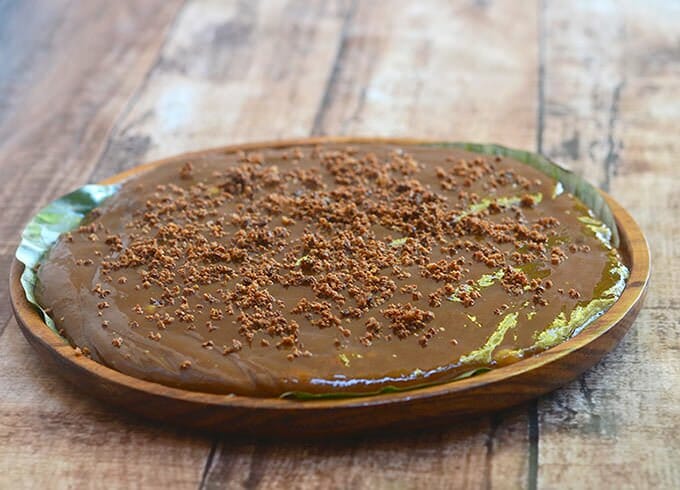
Kalamay in Bohol, Philippines

History

Kalamay (also spelled Calamay), which means “sugar”, is a sticky sweet delicacy that is popular in many regions of the Philippines. It is made of coconut milkbrown sugar, and ground glutinous rice. It can also be flavored with margarinepeanut butter, or vanillaKalamay can be eaten alone but is usually used as a sweetener for a number of Filipino desserts and beverages.[1] It is similar to the Chinese Nian gao (also known as tikoy in the Philippines) but is sweeter and more viscous. A cousin of kalamay is dodol, found in Indonesia, Malaysia, Brunei, Singapore and in some parts of the Philippines.

Resulta ng larawan para sa recipe of kalamay bohol

Ingredients

  • 2 1/4 cups glutinous rice flour
  • 2 1/4 cups muscovado or brown sugar
  • 2 cups coconut milk
  • 2 cups coconut cream
  • 1/2 cup water
  • 1/2 cup latik

Instructions

  1. Prepare a plate or round pan that you will use for the kalamay. Start by placing a clean banana leaf over a round pan. Brush some cooking oil or coconut oil on the banana leaf. Set aside.
  2. Combine coconut milk, coconut cream, water, and glutinous rice flour in a deep cooking pot. Mix well until then texture of the mixture becomes soft. Use wire whisk if necessary.
  3. Turn the heat on to medium. Gradually stir until the mixture starts to get hot. You will notice that lumps will form, continue to stir until bubbles appear.
  4. Set the heat to low-medium. Continue to stir for 15 minutes.
  5. Add the sugar. Mix well to incorporate. Continue to mix for the next 30 to 40 minutes or until the mixture becomes really thick and the color turns dark brown.
  6. Transfer the thick mixture on the prepared plate or pan. Spread and top with latik.
  7. Let it cool for a few minutes. Serve.

Pork Sisig, Pampanga Philippines

Pork Sisig is a popular appetizer that originated from the culinary capital of the Philippines: Pampanga. This delicious dish can also be categorized as the main dish. Pork Sisig was invented by the late Lucia Cunanan. She is popularly known as Aling Lucing – the sisig queen. Originally, pork sisig is composed of chopped pigs face (snout included) and ears with generous amounts of chicken liver. Hundreds of sisig variations are available today ranging from the original pig’s face (mascara) ingredient to a more healthy seafood concoction such as squid, tuna, milkfish (bangus), and mussels.

Resulta ng larawan para sa pork sisig

Ingredients

• 1 lb. pig ears

• 1 1/2 lb pork belly

• 1 large onion minced

• 3 tablespoons soy sauce

• 1/4 teaspoon ground black pepper

• 1 knob ginger minced

• 3 tbsp chili flakes

• 1/2 teaspoon garlic powder

• 1 piece lemon or 3 to 5 pieces calamansi

• ½ cup butter or margarine

• ¼ lb chicken liver

• 6 cups water

• 3 tablespoons mayonnaise

• 1 tsp salt   

Instructions

1. Pour the water in a pan and bring to a boil Add salt and pepper.
2. Put-in the pig’s ears and pork belly then simmer for 40 minutes to 1 hour (or until tender).
3. Remove the boiled ingredients from the pot then drain excess water
4. Grill the boiled pig ears and pork belly until done
5. Chop the pig ears and pork belly into fine pieces
6. In a wide pan, melt the butter or margarine. Add the onions. Cook until onions are soft.
7. Put-in the ginger and cook for 2 minutes
8. Add the chicken liver. Crush the chicken liver while cooking it in the pan.
9. Add the chopped pig ears and pork belly. Cook for 10 to 12 minutes
10. Put-in the soy sauce, garlic powder, and chili. Mix well
11. Add salt and pepper to taste
12. Put-in the mayonnaise and mix with the other ingredients
13. Transfer to a serving plate. Top with chopped green onions and raw egg.
14. Serve hot. Share and Enjoy (add the lemon or calamansi before eating)


Puto in Metro Manila Philippines

Puto is a type of steamed rice cake usually served as a snack or an accompaniment to savory dishes such as dinuguan or pancit in Philippine cuisine and believed is to be derived from the Kerala dish puttu.

Image result for PUTO


Cheese Puto Ingredients

2 cups all-purpose flour

1 cup sugar

1 1/4 tablespoons baking powder

2 cups water

1 cup evaporated milk

1 medium egg

1/4 cup unsalted butter, melted

36 pieces cheddar cheese, cubed

How to Make Cheese Puto

Sift together flour, sugar, and baking powder in a bowl. Set aside.

Mix together water, evaporated milk, egg, and butter in another bowl.

Make a well in the center of the dry ingredients and pour in wet ingredients. Mix just until combined.

Spoon batter into 1-ounce muffin tins until 3/4 full. Steam for 10 minutes.

Place a piece of cubed cheese onto the top of each puto and steam an additional 1 minute until the cheese is slightly melted. Remove from steamer and cool. Serve.