CURACHA

History

Curacha is famous in Mindanao, especially in Zamboanga. It’s a spanner crab or red frog crab, a crustacean hybrid native to the waters of Zamboanga and Sulu. It can be cooked with sauce or steamed.

Curacha

Ingredients
  • 1 kilo curacha (redfrog crab or spanner crab)
  • 2 Tbsp. butter
  • 1 Tbsp. sea salt or rock salt
  • 1 cup sprite or 7-Up
Instructions
  1. How to cook Halabos na Curacha:
  2. Wash the curacha in running water and use toothbrush to clean the shells if necessary. Drain.
  3. Put the curacha in a cooking pot or medium size wok. Sprinkle with salt, pour the sprite or 7-up and butter.
  4. Bring to a boil than simmer until the curacha is cooked and almost all the liquid has evaporated.

Transfer to a serving dish and serve.


GINATAANG MANOK

History

This chicken recipe involves sauteing chicken with onion, garlic, and ginger, then stewing in coconut cream. To make the dish more flavorful, native chicken is used.

Ginataang Manok


Ingredients
    • ¼ cup oil
    • 2 medium potatoes, peeled and quartered
    • ½ red bell pepper, seeded, cored and sliced into strips
    • ½ green bell pepper, seeded, cored and sliced into strips
    • 1 onion, peeled and sliced thinly
    • 2 cloves garlic, peeled and minced
    • 1 (3 to 4 pounds) whole chicken, cut into parts
    • 1 tablespoon fish sauce
    • 1 (14 ounces) can coconut milk
    • ½ cup water
    • 4 to 5 Thai chili peppers, stemmed and chopped
    • salt and pepper to taste
Instructions
  1. In a wide skillet over medium heat, heat oil. Add potatoes and cook, turning as needed, until lightly browned. With a slotted spoon, remove potatoes from pan and drain on paper towels.
  2. Add bell peppers and cook, stirring frequently, for about 30 seconds. With a slotted spoon, remove and drain on paper towels.
  3. Remove excess oil from pan except for about 2 tablespoons. Add onions and garlic and cook, stirring regularly, until limp.
  4. Add chicken and cook, turning as needed, for about 3 to 5 minutes or until lightly browned and juices run clear. Add fish sauce and cook for 1 to 2 minutes.
  5. Add coconut milk and chili peppers. Bring to a simmer. Lower heat, cover, and continue to cook for about 20 to 25 minutes or until chicken is cooked through and sauce is reduced.
  6. Add potatoes and cook for about 3 to 5 minutes or until potatoes are tender and sauce is thickened. Add bell peppers and cook for another 1 to 2 minutes or until heated through but still crisp. Season with salt and pepper to taste. Serve hot.

SATTI

History

Satti is a popular breakfast food in Mindanao particularly in Zamboanga. It’s actually three small bits of meat (beef and chicken liver) grilled in a stick similar to a barbecue, only it is served along with rice balls swimming in a sweet spicy sauce.

Ingredients

First of all, we’re going to list the ingredients you need to make satti sauce:

  • ½ cup siling labuyo or catumbal
  • 5 thumb size ginger pieces
  • 4 thumb size turmeric
  •  1 fist size onion bulb
  • 6 leaves of oregano, or 1 tsp oregano powder
  •  2 tbsp oil
  • ½ tsp shrimp paste
  • 1 tomato
  • ½ cup corn starch
  • ½ cup flour
  • 1 ½ cup sugar
  • 1 tbsp salt
  • 15 g Anito powder
  • 3-4 chicken cubes
  •  ¼ cup coconut milk
  • 1 tsp peanut butter
  • 2 tsp curry powder
  • 2 inches taro root

Recipe

Now let’s get down to business and give you the recipe for satti sauce:

  1.  Boil water 6 quarts.
  2. Add taro root to it.
  3. Add 3-4 chicken cubes, ¼ cup coconut milk and 2 tsp curry powder to it.
  4. Keep stirring while the mixture boils.
  5. Blend together ½ cup siling labuyo or catumbal, 5 thumb size ginger pieces, 4 thumb size turmeric, 1 fist size onion bulb and oregano. You may add a little water to begin the blend.
  6. Mix ½ cup corn starch, ½ cup flour, 1 ½ cup sugar, 1 tbsp salt and 15 g Anito powder, add water and stir until the mixture is free of lumps.
  7. Sauté tomato and shrimp paste with a little oil, and then add the mixture of siling labuyo or catumbal, ginger, turmeric, onion and oregano to it. Keep sautéing until the mixture becomes partially dried.
  8. Pour this mixture into the water that has boiled
  9. Stir and add coconut milk.
  10. Add the mixture of corn starch, flour, sugar, salt and Anito powder to it.
  11. Add water until you reach the desired consistency.
  12.  Let it cook for 20 minutes on medium flame.
  13. Keep stirring frequently to avoid any sticking on the pot.
  14. If you want the sauce to be less thick, you can add water.
  15. Let it cool for 2 minutes and then serve.
  16. The satti sauce you have made this way can be refrigerated for later use. You need to microwave it for 3-4 minutes whenever you want to use it.

BIRYANI

History

Biryani dish is said to be a food made by the Muslim community in Indian/Persian region. So it’s no surprise that this delicious recipe has made its way to the Muslim community as part Mindanao cuisine. Biryani is basically a fried rice dish with bits of chicken or seafood and other spices.

Biryani

Recipe

  • 600 gm boiled basmati rice
  • 4 tablespoon minced mint leaves
  • salt as required
  • 2 teaspoon coriander powder
  • 1 tablespoon garlic paste
  • 2 tablespoon tomato puree
  • 400 gm thinly sliced white onion
  • 8 green cardamom
  • 1 tablespoon milk
  • 1 kilograms chicken thighs
  • 1 teaspoon garam masala powder
  • 2 pinches saffron
  • 1 tablespoon ginger paste
  • 4 sliced & slit green chilli
  • 320 gm chopped tomato
  • 2 teaspoon cumin seeds
  • 6 tablespoon refined oil

For Marination

  • 1/2 teaspoon chilli powder
  • 6 tablespoon plain greek yogurt

1 teaspoon powdered turmeric

PASTIL

Pastil is a popular Mindanao food found in the street of Maguindanao. It’s basically a rice covered in banana leaf with chicken or beef adobo strips as fillings, which proves that Mindanao cuisine is more on easy-to-follow recipes. Zamboanga has also their own version of the dish. Their pastil is like an empanada, but instead of pork and vegetables, pancit noodles (rice noodles) are used as fillings.

Pastil

Recipe

1 kilo of Chicken

Half an onion, thinly sliced

½ cup Cooking oil

¼ cup of Soy Sauce

¾ cup Vinegar

½ tsp. Black Pepper

Salt to taste

4 Cups of White Rice

Banana Leaves for wrapping

Procedure:

  1. Cook rice then set aside.
  2. Slice chicken and boil until the meat is tender.
  3. Let the meat cool before making it into flakes.
  4. Put oil in a pan then sauté the sliced onions in low fire.  When the onions turn transparent, add the flaked chicken meat, salt, and black pepper.
  5. Cook for 10 minutes before adding the vinegar and soy sauce.  Continue to cook until the oil comes out.
  6. Put rice in banana leaves and top it with the chicken adobo flakes then wrap.

One Pastil usually sells for Php10 in Davao City.

Paksiw is a term used to refer to dishes cooked in vinegar and garlic. This could pertain to meats like pork (Paksiw na Pata and Lechon Paksiw are some of the examples) and seafood. Paksiw na Isda or Fish Cooked in Vinegar is a quick and easy seafood dish that is said to be one of the common everyday dishes prepared by Filipino families. Since the Philippines is composed of over 7,100 islands, fish is a staple particularly on the coastal areas. Bangus or Milkfish has been the regular fish variety for this dish (Paksiw na Bangus). However, due to availability, budget reasons, and personal preference, other fish varieties can be used.

Image result for paksiw na bangus

Ingredients

  • 2 pieces fish about half a pound each, cleaned and scales removed
  • 1 knob ginger sliced and pounded
  • 6 cloves garlic skin removed
  • 1/2 cup vinegar
  • 1 cup water
  • 1 medium onion sliced
  • 1 small bitter gourd chopped (optional)
  • 3 pieces finger chili
  • 2 teaspoon salt
  • 1 teaspoon whole peppercorn

Instructions

  1. Heat a pan and cooking pot then pour-in vinegar and water.
  2. Add salt and whole peppercorn then stir. Bring to a boil.
  3. Arrange the fish in the pan along with the ginger, garlic, onion, bitter gourd, and finger chili. Cover and simmer in low to medium heat for 12 to 15 minutes.
  4. Turn off the heat and transfer to a serving plate.
  5. Serve hot with steamed rice. Share and enjoy!
  6. Note: You may substitute salt with 3/4 to 1 tablespoon fish sauce.


BALO-BALO IN CENTRAL LUZON

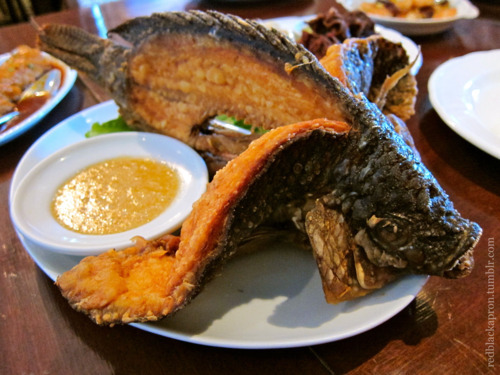
Balo balo, known better as burong hipon is a popular Kapampangan fare that is best paired with blanched bitter veggies and leaves like mustasa (mustard) and ampalaya (bitter gourd). With grilled fish, its a good alternative to soy sauce and in this case, the inihaw na hito was perfect.

Resulta ng larawan para sa balo balo

Ingredients:

  • 5 cups cooked rice – boil rice with 10 cups of water till cooked; you come up with a soft kind of cooked rice; cool rice thoroughly
  • 500 grams very fresh shrimps – alive if possible, the 2-inch long size; do not peel. In Sydney where you do not find shrimps that are alive, I use small, fresh prawns that are peeled and sliced in half – lengthwise. If you want to use fish, I use filleted fish and slice into 1/2-inch cubes or in small strips. In the Philippines, you can use whole small fresh gurami or tilapia, de-scale, debone and cut into finger sized strips. Do not use head of tilapia. Some even use the mud fish for this.
  • 250 grams young, fresh bamboo shoots – sliced very thinly and blanched for 5 minutes in hot water and drain well and cool down
  • 1/2 cup salt

Procedure:

  1. Get a well washed, dry, 1 to 2 gallon glass jar.
  2. Rinse the shrimps/fish with water and drain well. Pat dry to ensure dryness.
  3. In a large bowl, place shrimps and sprinkle with the salt, and mix thoroughly.
  4. Using rubber gloves, spread cool rice in a large bowl.
  5. Mix the bamboo shoots with the shrimps.
  6. Mix the shrimp/bamboo with rice using gloved hands.
  7. Put the mixture inside the jar, in layers, packing well each layer. You want to avoid air pockets in the jar.
  8. Cover the mouth of the jar with a clean sheet of plastic and close with lid.
  9. Some times it is hard to find glass gallon jars and I use a glass bowl that has a lid.
  10. Set aside in a cool place and let ferment for three days. In temperate countries, fermentation may take longer. What I do is on the third day, I smell the mixture and see if it’s smelly enough for me.
  11. The smellier it is, the more sour the sauce becomes. So watch for it. Also, the whole tiny shrimp and fresh fish, ferments faster than peeled prawns or filleted fish.
  12. If you want to cook the fermented shrimp mixture after three days, it will not be too smelly.
  13. If you let another 2 days go, keep it in the refrigerator so that it does not ferment too fast.

How to cook the fermented mixture:

Ingredients:

  • 1/2 cup cooking oil
  • 2 tablespoons finely crushed garlic
  • 2 cups finely chopped onions
  • 250 grams fresh tomatoes, seeded and coarsely chopped
  • 1/4 of the mixture

Procedure:

  1. In a non-reactive (non-stick or ceramic or glass), heavy sauce pan, over low fire, pour in oil and saute garlic and onion till the garlic is a light golden tan and the onions are translucent.
  2. Add the tomatoes and simmer for 10 minutes or till the tomatoes do not have a raw taste.
  3. Constantly stir to prevent sticking to bottom of pan.
  4. Add the mixture and cook for about 10 minutes, stirring continuously.
  5. Taste the mixture and adjust to your liking. It must not be too salty.
  6. Cool and serve.
  7. When it is hot, it really smells! When it’s cooled, it does not smell too bad.
  8. Serve with fried, or grilled fish and steam vegetables and hot rice.

LUMPIANG UBOD IN NEGROS OCCIDENTAL

Of all the different kinds of lumpia found in the Philippines, the one from Negros Occidental is different from the other lumpia in other regions. Lumpiang Ubod (fresh palm spring rolls) from Silay, Negros Occidental has a fresh delicate wrapper, is made with young ubod—white strips of fibrous meat from the heart of the palm vegetable—and is served without a peanut sauce which often accompanies the spring rolls.

Resulta ng larawan para sa lumpiang ubod in visayas recipe

Ingredients

Lumpiang ubod Wrapper:
  • 2 eggs
  • 3 oz/75 g cornflour
  • ½ pint/250 ml water
  • peanut oil
Lumpia Ubod Filling:
  • 2 tbsp. oil
  • 1 garlic clove, crushed
  • 1 small onion, thinly sliced
  • 4 oz/100 g parboiled lean pork, diced
  • 2 oz/50 g ham, shredded
  • 4 tbsp. peeled chopped prawn
  • 2 oz/50 g cooked chickpeas
  • 8 oz/200 g ubod (coconut palm hearts), shredded
  • 6 oz/150 g French beans, shelled
  • 1 carrot, shredded
  • 12 oz/300 g cabbage, shredded
  • 12 sprigs onions
  • salt and pepper
  • 12 crisp lettuce leaves
  • 12 lumpia wrappers
Lumpiang Ubod sauce:
  • ¼ pint (or more) chicken stock
  • 2 oz/50 g sugar
  • 2 tbsp. soya sauce salt
  • 1 tbsp. cornflour
  • 3 tbsp. cold water
  • 1-2 tsp. finely minced garlic
Instructions
To make Lumpia Wrapper:
  1. Separate the eggs and whisk the whites until very stiff. Fold into the lightly beaten yolks.
  2. Blend the cornflour with water, adding the water gradually to ensure smoothness.
  3. Stir thoroughly into the egg. Lightly brush the frying pan with oil and heat.
  4. Using 2 tbsp. of lumpia batter at a time, fry very thin pancakes.
  5. Tilt pan to spread the batter evenly, do not turn and do not allow the pancakes to color.
Lumpia Ubod Filling:
  1. Heat the oil and lightly fry the garlic and onion until soft.
  2. Add the pork and ham, cook, stirring for a few minutes.
  3. Add prawns and chickpeas and cook a little longer.
  4. Stir in the ubod, beans, carrot and cabbage.
  5. Season with salt and pepper.
  6. Cover and simmer until the vegetables are just tender. Drain and cool.
  7. Wrap a portion of the filling and a sprigs onion in a lettuce leaf and then in a pancake.
  8. Serve with Lumpiang Ubod sauce.
Lumpia Ubod Sauce:
  1. Bring the stock to the boil with the sugar, soya sauce and salt.
  2. Blend the cornflour with the cold water and stir it into the stock.
  3. Simmer, stirring for 2-3 minutes, until the sauce thickens.
  4. Sprinkle the minced garlic on the top.

KANSI IN ILONGGO

Kansi is an Ilonggo beef stew which is very popular in Bacolod City. The soup has batwan as its main souring ingredient. The soup tastes like a combination of sinigang and bulalo.

Kansi

Ingredients
  • 2 pounds beef shanks
  • 2 stalks lemongrass
  • 1 tablespoon oil
  • 4 to 5 cloves garlic, peeled and minced
  • 8 cups water
  • 1 thumb-size ginger, peeled, sliced and pounded
  • 1 onion, peeled and quartered
  • 1 tablespoon annatto powder
  • 1 package (1.41 ounces) tamarind soup base
  • 1 can (20 ounces) green jackfruit, drained
  • 6 to 8 pieces kamias
  • 2 Thai chili peppers
  • salt and pepper to taste
  • salt and pepper to taste
Instructions
  1. Wash beef shanks well to remove any blood or impurities. Drain well.
  2. Peel the outer layer of the lemongrass stalks until you reach the pale central core. Cut into 3 to 4-inch lengths and with the back of the knife, lightly pound each piece. Set aside.
  3. In a deep pot over medium heat, heat oil. Add garlic and cook, stirring regularly, until limp.
  4. Add beef shanks and cook, turning as needed, until lightly seared. Make sure not to burn the garlic.
  5. Add water and bring to a boil, skimming scum that floats on top. When the broth clears, add onion. Lower heat, cover, and simmer for about 1½ to 2 hours or until meat is fork-tender.
  6. In a small bowl, combine annatto powder with about ½ cup of the broth. Stir until annatto powder is dissolved and return broth to pot. Add tamarind soup base. Stir to disperse.
  7. Add lemon grass, green jackfruit, kamias, and chili peppers. Continue to cook for about 10 to 15 minutes or until jackfruit pieces are heated through. Season with salt and pepper to taste. Serve hot.

Hopia

Resulta ng larawan para sa hopia recipe

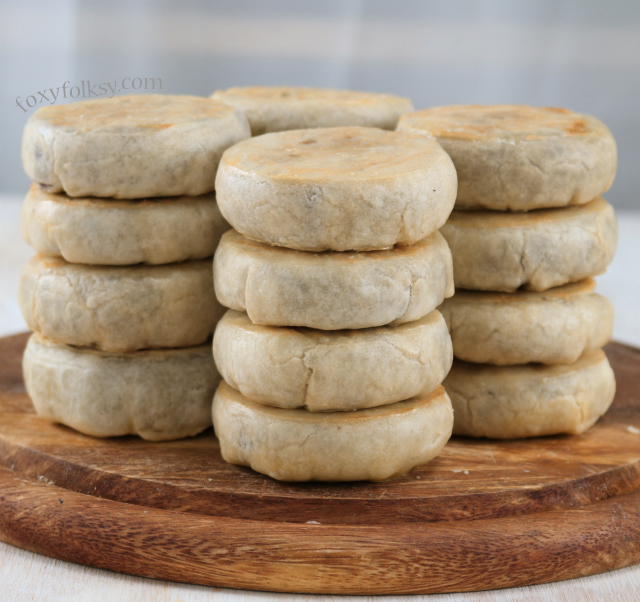
Hopia is yet another favorite ‘merienda’ or snack for Filipinos.  Hopia is made of thin flaky pastry, traditionally filled with mung bean paste (Munggo). But nowadays, there are more variations to choose from when it comes to the filling, most popular is the Ube or Purple yam and the one I prefer more personally.

Ingredients

MUNGGO FILLING

  • 1 cup red mung bean (or yellow) – boiled
  • 1/4 cup condensed milk (optional)
  • 3/4 cup sugar
  • 1/4 cup flour

UBE (PURPLE YAM) FILLING

DOUGH 1

  • 2 1/4 cups flour
  • 1 1/2 tablespoons sugar – dissolved in 1/2 cup water
  • 1/2 cup shortening or lard – cut into small cubes
  • pinch of salt

DOUGH 2

  • 1 cup flour
  • 1/2 cup shortening

EGG WASH

  • 1 egg – beaten and diluted in 1/4 cup water

Instructions

  1. MUNGGO FILLING: Soak Mung beans overnight. Drain and refresh water then bring to boil until the beans start to soften, reduce heat and remove some of the water just above the beans using a ladle or spoon. Add the sugar and continue to cook until it starts to thicken. Transfer to a blender or use a stab mixer and pulse until it becomes smooth and fine. Put back to heat and add the flour and cook while stirring constantly until it turns into a thick paste. Remove from heat and let it cool down before using.
  2. Alternatively, canned red beans can also be used and here is the recipe.
  3. FOR THE FLAKY PASTRY Combine all ingredients for Dough 1 in a big bowl. Using a hand mixer or with your hand, mix the ingredients that the shortening or lard are cut into small pieces and covered with flour. Add more water if too dry. Knead just a couple of times and then form into a ball and cover with plastic wrap or kitchen towel and set aside.
  4. In a separate bowl, combine the ingredients for Dough 2. Mix well using your hands until a paste is formed.
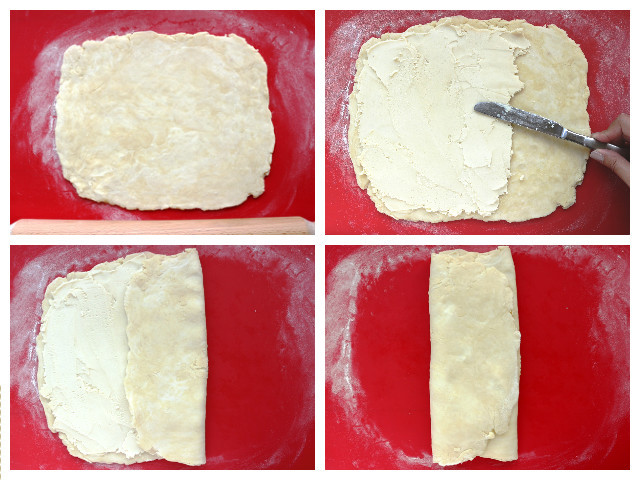
  5. Roll Dough 1 into a rectangle about a half inch. Turn the rectangle that the long side is towards you then using a bread knife or spoon, spread Dough 2 evenly on top of Dough 1 covering two-thirds of the rectangle from the left side. Fold the third uncovered part (from the right) over the center third part. Then fold the remaining third part (from left) over both layers, making 3 layers in total.

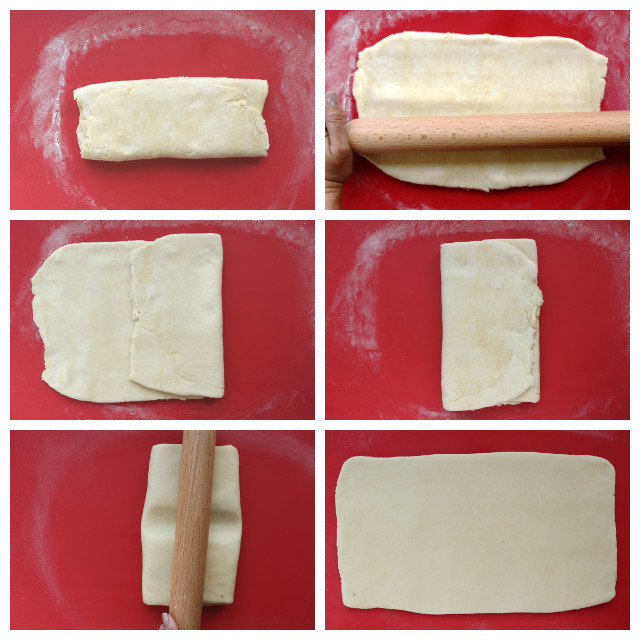
  6. Now roll it back to its original size and then repeat the three-fold process. Then do this again for the third time. After the last fold, let the dough rest for 5 minutes.

  7. Roll the dough again into its original size(rectangle). Cut the dough into 2, lengthwise, then tightly roll each dough into 2 cylinders (like a jelly roll). Cut each cylinder into 12 equal parts. Place them in a bowl and cover with a wet paper towel or plastic wrap to avoid from getting dry.

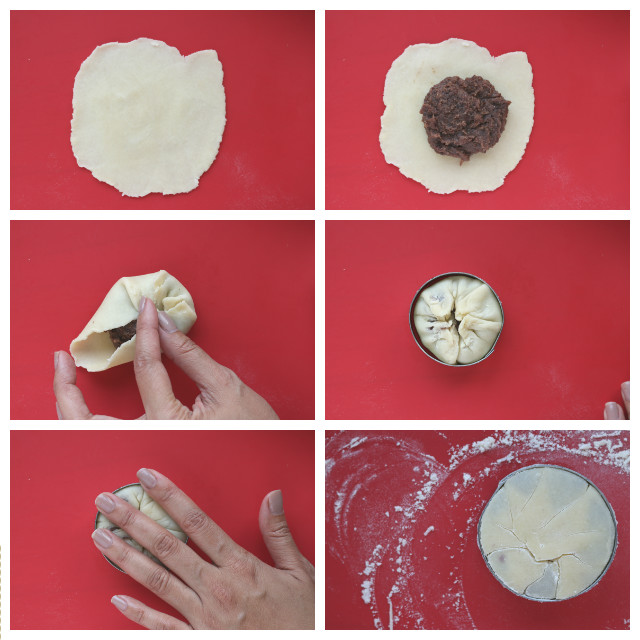
  8. Take a piece of dough and flatten with a rolling pin as thin as possible and try to make it round. Scoop a spoonful of the filling and place it in the middle. Gather the sides of the dough over the filling and pinch together to close. Take a round cookie cutter and insert the filled dough inside the circle, then with pinched side down press it against the counter to take form.

  9. Place the Hopia on a baking sheet lined with parchment paper with the pinched side facing up and bake at 180°C for 15-20 minutes or until slightly golden, they will form a bulge while baking but that is ok. Take them out of the oven and now turn them so that the pinched side is now facing down and slightly press them flat using a spatula or slotted turner. Brush with egg wash and return them to the oven and bake for 2-3 minutes more.

  10. Remove from oven and let them cool on a cooling rack.
Design a site like this with WordPress.com
Get started