Chicken Inasal Philippines

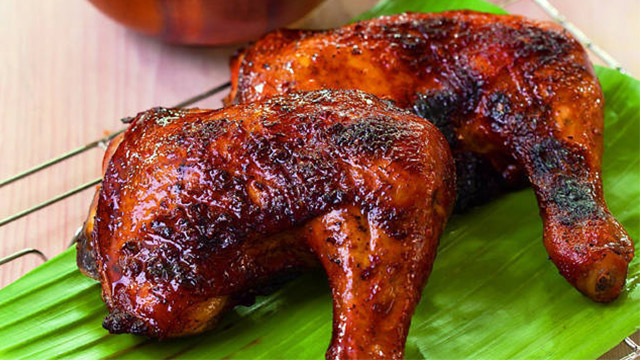
Chicken inasal, commonly known simply as inasal, is a Filipino variant of roast chicken, marinated in a mixture of Calamansi – a Filipino citrus reminiscent of lemon, orange and lime, pepper, coconut vinegar and annato, then grilled over hot coals while basted with the marinade.
Resulta ng larawan para sa visayas food

Filipino cuisine is as diverse as it can get. The Visayas region has dishes that are well-loved and bursting with vibrant flavors! Whip them up at home and share them with friends and family—they will thank you for it.  Chicken Inasal is all over the place. In fact, several restaurant chains that specialize in this dish are in full swing branching-out to dominate its presence in Metro Manila and the nearby provinces. Chicken Inasal and all you can eat rice, doesn’t this sound familiar? I’ve been to several restaurants and grills serving this special grilled chicken dish and they were all good.

Ingredients

  • 2 lbs chicken cut into serving pieces
  • 2 tablespoons ginger minced
  • 2 tablespoons garlic minced
  • 3/4 cup lemongrass chopped
  • 1 cup coconut vinegar
  • 1/2 cup lemon or calamansi juice
  • 1 tablespoon salt
  • 1/4 cup brown sugar
  • 1 cup lemon soda softdrink
  • 1/2 tablespoon ground black pepper
  • Basting Sauce:
  • 3 tablespoons annatto oil atsuete oil
  • 1/2 cup margarine softened
  • 1/4 teaspoon salt
  • 1 teaspoon lemon or calamansi juice

Instructions

  1. In a freezer bag or large bowl, combine chicken, lemongrass, salt, ground black pepper, ginger, garlic, brown sugar, vinegar, lemon-lime soda, and lemon juice.
  2. Stir or shake the mixture until every ingredient is well incorporated. Marinade for 1 to 3 hours.
  3. In a bowl, combine margarine, annatto oil, salt, and lemon juice then stir. Set aside.
  4. Grill the chicken while basting generous amount of the margarine mixture.
  5. Transfer the grilled chicken to a serving plate.
  6. Serve with sinamak. Share and enjoy!


SEAFOOD PAELLA of ZAMBOANGA CITY, PHILIPPINES

Throughout Zamboanga, you’ll see various Spanish influences in their architecture, their awesome language (Chavacano!), and the food. Country Chicken Restaurant may sound like an American eatery but their seafood paella is simply divine. Topped with prawns, clams, peas, and green beans, the turmeric rice is very flavorful. I could have a huge serving all to myself! Of course, don’t forget to try Country Chicken Restaurant’s other Filipino dishes and their crispy fried chicken.


Image result for Seafood Paella

INGREDIENTS

  • 6cups clam or seafood broth
  • 1tsp thread saffron
  • 1 1/2pounds firm-fleshed fish, cut in bite-sized pieces
  • 1dozen mussels
  • 1dozen small clams
  • 12large shrimp in shells
  • Spanish sea salt
  • 2tbsp parsley, minced
  • 8cloves garlic, minced
  • 1tbsp fresh thyme
  • 2tsp sweet smoked paprika
  • 8tbsp olive oil
  •  1medium onion, chopped
  •  6scallions, chopped
  •  1red bell pepper, finely chopped
  •  1large tomato, chopped
  •  2cups Bomba paella rice or Calasparra paella rice
  •  Lemon wedges
  •  Alioli (garlic mayonnaise)

PROCEDURES

STEP 1
Heat broth in a large pot. Stir in saffron. Pat fish and shrimp dry with paper towels. Sprinkle with salt and let sit 10 minutes. Use a mortar and pestle to mash parsley, garlic, thyme and 1/8 tsp salt into a paste; stir in paprika. Add water if necessary to form a paste.
STEP 2
Heat 6 tbsp of oil in 15″ paella pan over medium high heat and quickly brown the fish 1-2 minutes. Do not fully cook. Remove to warm platter. Add remaining 2 tbsp of oil, onion, scallions and bell pepper to paella pan and cook until the vegetables are slightly softened. Raise heat, add tomato and cook until it becomes sauce-like, 2 to 5 minutes. Pour in the hot broth and bring to a boil. Sprinkle the rice evenly across the pan. Boil for 3 minutes, stirring rice and rotating pan occasionally. Add all reserved fish (but not shrimp). Stir in parsley paste. Taste for salt. Do not stir after this point. Lower the heat, continue to simmer until rice is no longer soupy but enough liquid remains to continue cooking the rice (about 10 min.). Add extra liquid if necessary.
STEP 3
Arrange shrimp, clams and mussels over rice, placing edges of mussel and clam shells so they open facing up. Cook, uncovered, for 15-20 minutes until rice is almost done. Remove pan from the heat and cover with foil. Let sit 10 minutes. Garnish with lemon wedges and serve with fresh alioli.


Filipino Delicacies & Foods in VISAYAS

Filipino cuisine is as diverse as it can get. The Visayas region has dishes that are well-loved and bursting with vibrant flavors! Whip them up at home and share them with friends and family—they will thank you for it.

1 Humba

Humba is popularly known as the Visayas region’s version of adobo. Enjoy this sour and slightly sweet flavor combination with lots of steamed rice!

2 Pocherong Bisaya

The light lemongrass-infused broth of Visayan pochero is both hearty and comforting. Use the freshest produce possible to make this dish shine.

3 La Paz Batchoy

The ultimate Filipino noodle soup is a favorite for a reason. Dig into firm egg noodles that swim in a slow-cooked broth with lots of flavorful toppings: crunchy garlic, chicharon bits, green onions, and lots of pork!

4 Chicken Inasal

Bacolod-style chicken inasal uses annatto seeds and oil (atsuete) to flavor the chicken. Turn up the grill to get that smoky flavor!

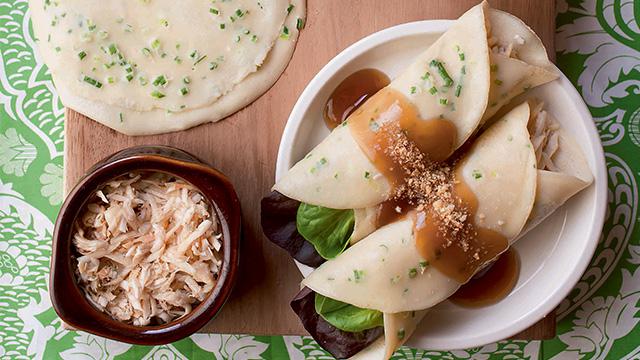
5 Lumpiang Ubod

Negros Occidental boasts one of its most refreshing dishes that Pinoys love to enjoy on a hot day: heart of palm wrapped into a delicious egg roll!

6 Chicken Molo Soup

Also known as pancit molo, this soup has soft chicken wonton in it’s broth. Snuggle into it on a rainy day.

7 Kinilaw

This popular Visayan dish is among the most simple to make. Use the freshest fish you can find and make enough to share with the family!

INUBARANG MANAOK NG ILOILO

nubaran basically means the dish is cooked with ubad. No, it’s not a typo error, it is really ubad not ubod – different from but practically the same. Confusing? Well ubod is the pith or the center of a coconut tree while ubad is the pith of a banana tree.

To make this dish, one has to prepare an ubad for cooking – first thinly slice, around half a centimeter, the cleaned pith (must be very white and sized like a fluorescent lamp to be sure of the quality.) . Then using a barbecue stick, remove web like fibers “interconnecting” these slices (these are actually hardened banana sap). When finished you can crush is into smaller pieces and add to your cooking.

Ingredients

  • 1 whole (native) Chicken
  • 3-4 cups chopped Ubad, prepared as described above
  • 1 stalk Tanglad (Lemongrass)
  • 1 thumb size Ginger, sliced
  • 5 clove Garlic, finely chopped
  • 1 medium Onion, finely chopped
  • Salt and Pepper to taste or chicken broth cubes
  • 2pcs Batwan or Libas (a souring agent leaf)
  • Water


How to make Inubaran na Manok

  1. Cut the chicken into bite-size pieces.
  2. In a pan, saute the chicken in garlic, ginger and onion.
  3. Add water enough to cover the chicken. Boil until chicken meat is tender.
  4. After 20-25 minutes,add the ubadtanglad and batwan (if you will this instead of libas). If you will be using libas, add it 5-10 minutes after this.
  5. Once chicken is tender, sdd salt and pepper to taste. You can also add chicken

OKOY IN LAGUNA, PHILIPPINES

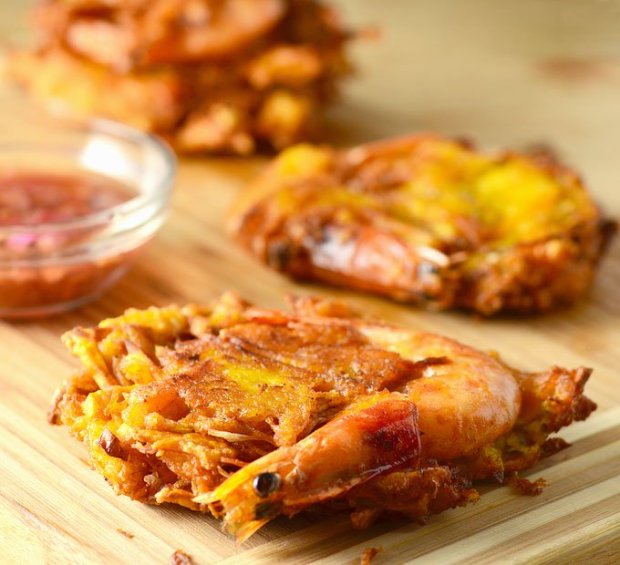
Believed to have originated in the province of Laguna, Philippines, Okoy or Ukoy is a simple yet very tasty Filipino dish and appetizer made from deep-fried battered baby shrimps. The shell of the shrimp is left unpeeled as it enhances the flavor and crispiness of okoy.

ukoy4.jpg


INGREDIENTS: 

  • ½ lb. baby shrimps, shell on, cleaned and whiskers trimmed off
  • 1 cup kamote (sweet potato), grated
  • 1 cup cornstarch
  • ¼ cup flour
  • 1 egg
  • 1 cup water
  • ½ tsp. salt
  • ½ tsp. ground black pepper
  • 1 tsp. atsuete(annatto/ achiote) extract or ½ tsp. powdered annatto
  • 1 cup cooking oil


PROCEDURE: 

  1. In a large bowl, combine the cornstarch, flour, egg, water, atsuete, salt, and black pepper. Stir the batter mixture very well to make sure no lumps will form.
  2. Add the shrimps and sweet potato. Mix until well blended.
  3. Prepare and heat the pan with enough cooking oil for deep frying.
  4. When the oil is ready to hot, scoop out around 2 to 3 tablespoons of shrimp mixture and carefully drop them in the middle of the pan. Press it down with a spatula to flatten similar to a pancake.
  5. Cook each side for about 2 to 3 minutes until golden brown (depending on the thickness of the batter mixture).
  6. Remove the fried okoy from the pan and drain on paper towel to absorb excess oil. Repeat the process until the remaining shrimp batter mixture is used up.
  7. Serve while warm and crispy along with spiced vinegar dipping sauce (sukang maanghang).

TIPS FROM ENZ: 

    Put some veggies by adding mung bean sprouts and julienned carrots in the batter mixture. If preferred, peel off the shells of baby shrimp. Bigger shrimps can also be used. Cut them into smaller pieces before adding in the batter. If no fresh shrimps are available, dried shrimps will do. Dilis or anchovy is also a popular substitute to shrimps. Butternut squash or pumpkin can be substituted with sweet potato. Ketchup and mayonnaise can also be used as dipping sauce.


CURACHA WITH ALAVAR SAUCE RECIPE IN ZAMBOANGA, PHILIPPINES

Curacha is famous in Mindanao, especially in Zamboanga. It’s a spanner crab or red frog crab, a crustacean hybrid native to the waters of Zamboanga and Sulu. It can be cooked with sauce or steamed.

min12

INGREDIENTS:

  • 1 kilo curacha or crab
  • 1/2 kilo grated coconut
  • 1/2 kilo Alavar sauce
  • 1 bulb of garlic
  • 1/2 thumb of ginger
  • 4 pinches of salt
  • 4 pinches ajinomoto
  • 1 1/2 cup of water
PROCEDURES:
1. Wash curacha or crab. Place in cooking pot. Set aside.
2. Place grated coconut in a mixing bowl. Pour water and mix. With your hands, squeeze all milk from the coconut. Set aside.
3. Mince garlic and ginger into tiny pieces. Set aside.
4.Sprinkle the salt, MSG, garlic and ginger all over the curacha or crab. Pour coconut milk all over the curacha or crab.
5. Turn stove on high heat until the coconut milk comes to a boil. Then drop the alavar sauce into the pot and lower the knob to medium heat.
6. When the coconut oil starts to surface, turn off the stove.

ADOBONG PUSIT OF MINDORO, PHILIPPINES

Mimaropa (Region IV-B) also known as Southern Tagalog Islands is composed of Mindoro, Marinduque, Romblon, and Palawan. The region has a diverse and eccentric cuisine. Marinduque is popular for its Bibingka Lalaki (Male Bibingka), a rice cake that uses tuba or coconut wine; and Arrowroot cookies. Romblon is popular for its dish called Sarsa that is made from boiled coconut,  chilies, and tiny shrimp. Palawan is popular for tamilok (shipworm, a worm-like mollusk.)  Mindoro’s rich marine life strongly influences the local industry and cuisine.  It is popular for Adobong Pugita, Octopus Adobo.

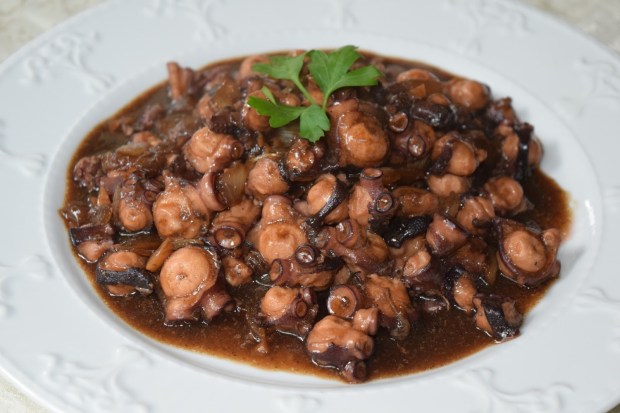
Adobong Pugita is made with a mature octopus that is cooked in soy and vinegar sauce.  If cooked perfectly, the dish yields a very flavorful and succulent octopus that is well-matched with steamed rice. It is usually served as a main entree for lunch or dinner or as an accompaniment to beer in the Philippines.

ADOBONG PUSIT.JPG

Ingredients:
  • 1 whole adult octopus, cleaned,  cut in bitesize pieces, ink sac carefully separated
  • 1/2 cup soy sauce
  • 1/2 cup vinegar
  • 1/2 cup water for marinating
  • 2 tablespoons vegetable oil
  • 6 cloves garlic, minced
  • 1 large onion, chopped
  • 4 dried bay leaves, optional
  • salt and pepper to taste
  • 4 cups of boiling water for blanching

Procedure:

  1. Marinate the cuts of octopus in soy sauce, vinegar, water, salt and pepper for 45 minutes. Drain the octopus and save the marinade for Step 3. Set the marinated octopus aside.
  2. Heat oil in a wok or deep skillet. Saute garlic and caramelize the onion for 5 minutes.
  3. Pour the marinade on the caramelized onion and garlic. Drop the bay leaves in if using. Add the octopus ink. Season with salt and pepper. Bring to a boil and simmer for 8-10 minutes or until the liquid has reduced. Turn the heat off.
  4. While the sauce is simmering: bring water to a brisk boil in a separate saucepan. Blanch the marinated octopus for 2 minutes. Drain well.
  5. Add the blanched octopus to the adobo sauce. Stir to mix and transfer to a serving plate.
  6. Serve warm with steamed rice.

Notes:
*  Octopus can be substituted with squid.
*  Asian stores and seafood markets carry frozen and fresh octopus.
* Do not overcook the octopus. Follow the time indicated in the recipe and watch it closely.

FAMOUS BICOL EXPRESS (SINILIHAN) OF BICOL, PHILIPPINES

BICOL EXPRESS

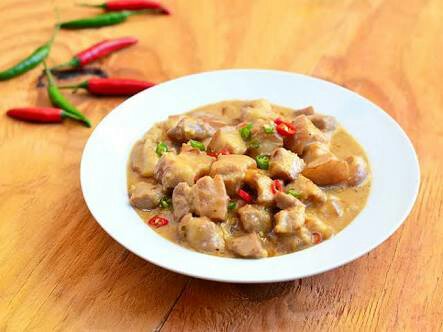
The dish was actually popularized, prepared and sold in Malate, Manila and we can consider that it is a myth that the Bicol Express originated in the province of Bicol. It was a food bought at the train station, usually consumed during the 8-hour train trip from Manila to Naga. [1]

images (5)2040164344..jpg
BICOL EXPRESS RECIPE:

Ingredients

  • 3 cups coconut milk
  • 2 lbs pork belly cut into strips
  • 1/2 cup Shrimp Paste
  • 1 tbsp Garlic minced
  • 6 pieces Thai chili or Serrano pepper
  • 3 tablespoons minced ginger
  • 1 medium onion minced
  • 2 tablespoons cooking oil
  • Salt and Pepper to taste

Instructions

  1. Heat a pan and then pour-in the cooking oil.
  2. Sauté the garlic, onion, and ginger
  3. Add the pork and then continue cooking for 5 to 7 minutes or until the color becomes light brown
  4. Put-in the shrimp paste and Thai chili or Serrano pepper. Stir.
  5. Pour the coconut milk in. Bring to a boil. Simmer for 40 minutes or until the pork is tender
  6. Add salt and ground black pepper to taste
  7. Serve Hot. Enjoy!


BACALAO OF CAVITE CITY, PHILIPPINES

Bacalao ng mga Caviteño is a proud recipe of Cavite. Usually served in Holy Week or Araw ng Pangilin sa pagkain ng karne (Meat Fasting). Bacalao is a Spanish word that means dried Codfish or labahita in Tagalog.

Bacalao is a coined word that originated from the word “Bacalhau”. Bacalao or Bacalhau is a dried codfish specifically from Portugal and Brazil. It is probably from the influence of Spaniards invasion that was adapted by our ancestors for many years. An amazing heritage recipe of Cavite.

Image result for bacalao cavite city

Ingredients

Direction

  1. Soak the salted cod in about 2 quarts of water, changing the water 3 times over the course of 8 hours. Drain and cut the fish into bite-size pieces.
  2. Layer the half of each ingredient in the following order: potatoes, codfish, onions, hard-boiled eggs, capers, garlic, olives, roasted red peppers, and raisins. Place the bay leaf on top, then pour half the tomato sauce and half the olive oil. Repeat with the remaining ingredients in the same order. Pour the water and white wine on top. Do not stir.
  3. Cover and bring to a boil over medium heat. Reduce heat to medium-low and simmer until the potatoes are tender about 30 minutes.

SUMAN-LATIK OF LEYTE, PHILIPPINES

Another version of rice cake is the suman malagkit made from glutinous rice, coconut milk, brown sugar and flavored with a lye solution, which makes the taste distinct. Also wrapped in banana leaf, this dessert is served with the “latik” sauce on top and is best enjoyed with coffee or hot chocolate. Grated coconut meat can also be used as a topping.

Suman with latik Photo by: Dan Brian Gerona/Wikimedia Commons

Ingredients

  • 2 1/4 cups glutinous rice
  • 1 teaspoon lye water
  • 2 cups water
  • 1 whole banana leaf cleaned

Instructions

  1. Place the glutinous rice in a mixing bowl then pour-in water. Stir and soak for 2 to 3 hours.
  2. Drain excess water from the mixing bowl then add lye water and stir thoroughly. The mixture will turn yellowish. Let stand for 30 minutes. Note: do not go beyond the recommended measurement for lye water.
  3. Prepare the banana leaves. Note: Fresh banana leaves can be heated directly in fire for a very short time. This releases the natural aroma of the leaf and makes it more flexible. If you are using fresh frozen banana leaves, it is better to just wash it in warm water. You’ll need a pair of leaves per serving. The bigger leaf should measure about 12 by 10 inches while the smaller is 4 by 5 inches.
  4. Arrange the banana leaves by placing the larger leaf first in a flat surface then put the smaller leaf in the center of the larger leaf.
  5. Scoop about 1/4 cup of the rice mixture and place it over the smaller leaf.
  6. Fold the leaf to secure the rice mixture (see video for procedure) and tie with a kitchen twine.
  7. Arrange the folded banana leaves with rice mixture in a cooking pot then pour-in enough water.
  8. Turn-on heat then let boil. Simmer for 80 minutes.
  9. Turn-off heat and transfer the banana leaf covered rice cake on a serving dish.
  10. Serve with white sugar, brown sugar, or latik.
  11. Share and enjoy!